Cruise ship entertainment is a continuous operation that shapes much of the guest experience onboard. While passengers enjoy polished shows, live music, games, and social events, entertainment on a cruise ship is carefully planned, coordinated, and adjusted every single day of the voyage. It is not limited to evening performances in the theater, but extends across the ship from early morning activities to late-night events, creating a constant rhythm of engagement.
The entertainment department is responsible for organizing and delivering this experience. Led by the Cruise Director and supported by entertainment and activities managers, the team plans daily schedules, coordinates performers, and ensures that each event fits into the overall flow of the cruise. These roles combine guest interaction, operational planning, and leadership, and they play a key part in maintaining the atmosphere and energy onboard.
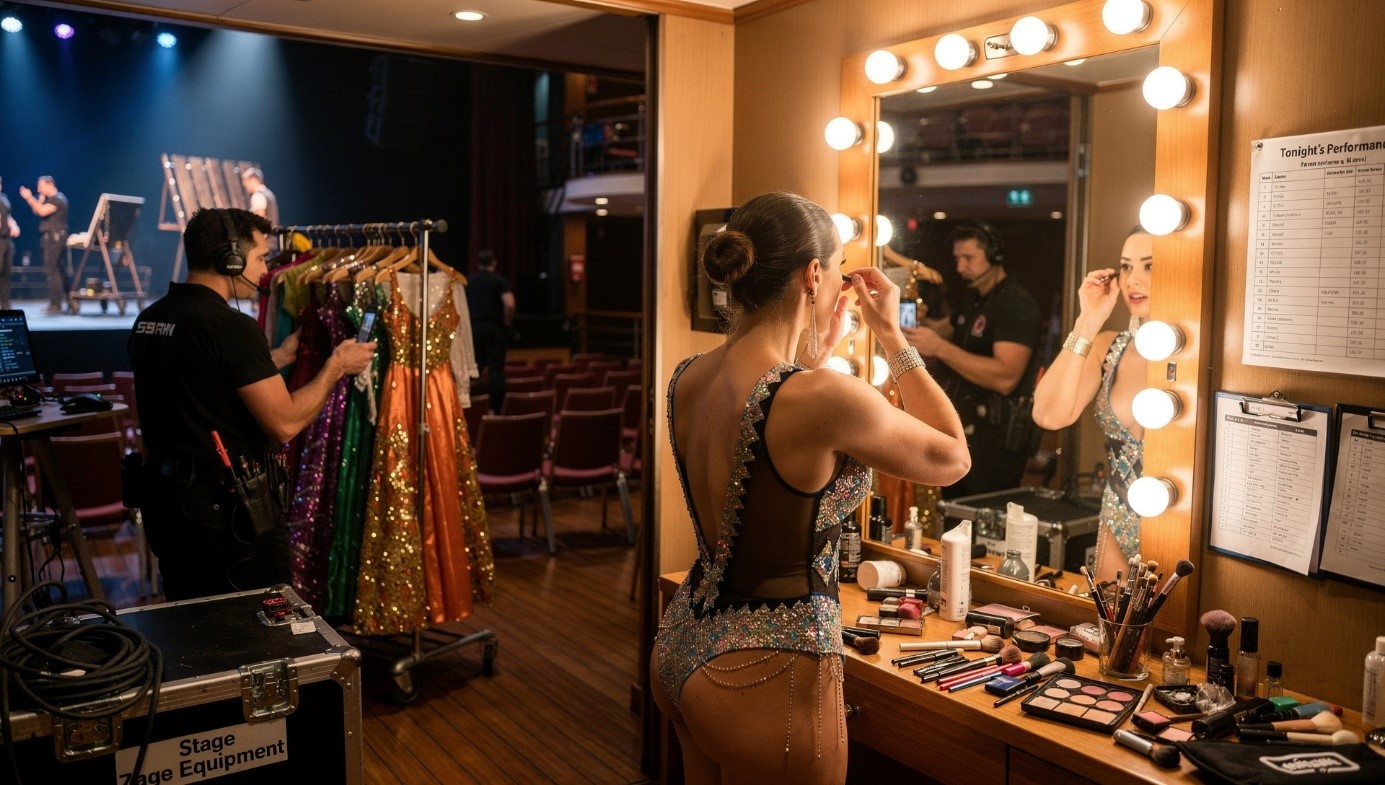
Production cast members, including professional singers and dancers, are central to cruise ship entertainment. They perform large-scale theatrical shows that are often repeated multiple times per cruise and must meet high performance standards. Alongside the production cast, cruise ships host a wide range of musicians, bands, solo performers, and guest entertainers who provide live entertainment in lounges, bars, theaters, and outdoor venues. Each performance must be timed and coordinated with other ship operations.
Cruise staff members support entertainment throughout the day by hosting games, quizzes, sports activities, and social programs. They interact closely with guests, encourage participation, and help create a welcoming and lively environment. Their role is highly visible and requires confidence, adaptability, and strong communication skills, as they work with guests from different cultures and age groups.
Behind every show and activity, technical and operational teams provide essential support. Sound, lighting, video, and stage systems must function reliably in a maritime environment where movement, vibration, and limited space add complexity. Technical teams work closely with performers and entertainment managers to ensure smooth execution while always complying with safety procedures and shipboard regulations.
Cruise ship entertainment depends on teamwork and constant coordination. Performers, cruise staff, managers, and technicians must communicate clearly and adapt quickly to changes such as weather conditions, itinerary adjustments, or technical issues. Entertainment schedules often change, and flexibility is essential to maintain quality and consistency.
Understanding how cruise ship entertainment really works behind the scenes reveals that it is a structured, demanding, and highly professional operation. It requires creativity, discipline, and collaboration across many roles, all working together to deliver memorable experiences that define life onboard a cruise ship.