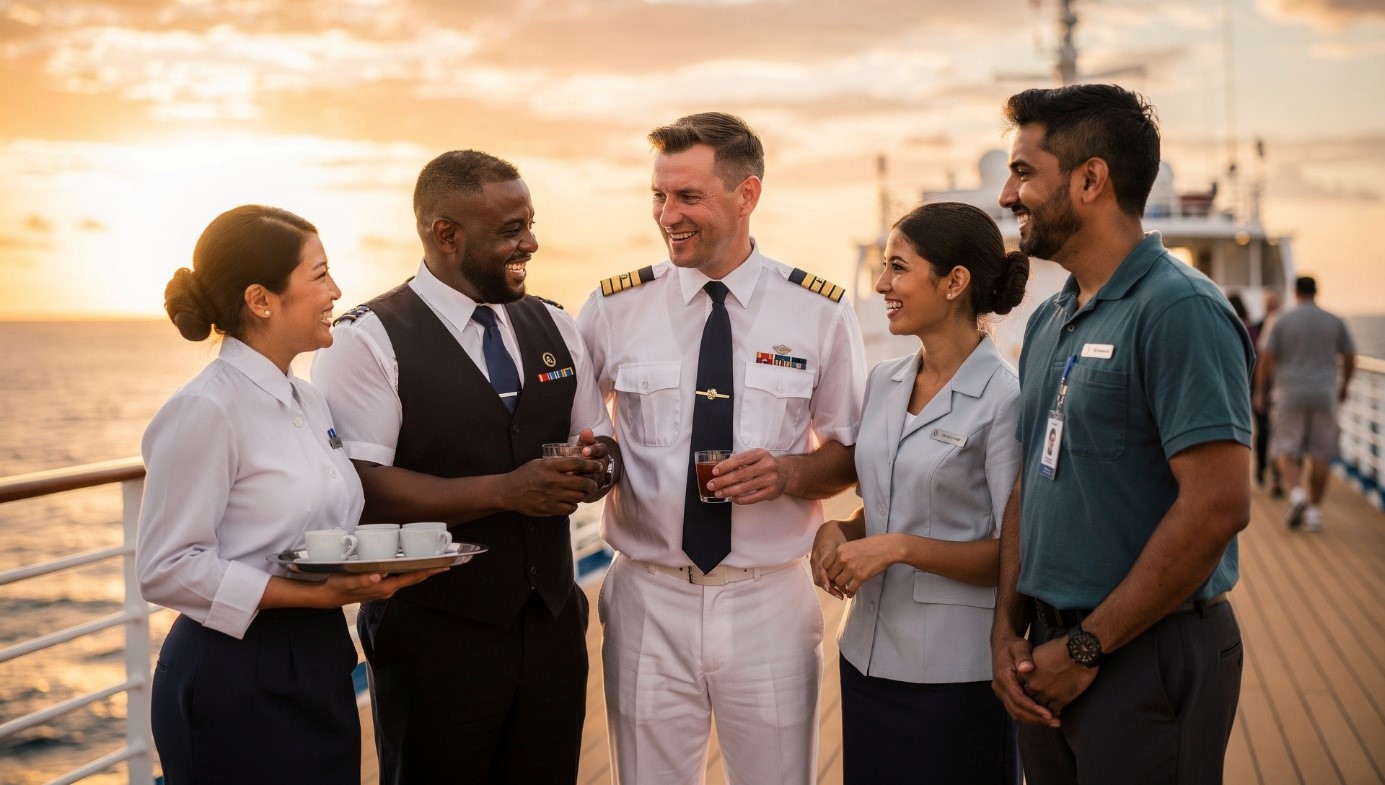
One of the defining characteristics of cruise ship life is its multicultural environment. Cruise ships operate as floating international communities, bringing together crew members from dozens of countries, languages, and cultural backgrounds.
For many crew members, this multicultural setting is both one of the most challenging and most rewarding aspects of life at sea. Daily operations require constant interaction with colleagues who may have different communication styles, work ethics, and cultural norms. Success onboard depends heavily on adaptability, respect, and open-minded communication.
English is the working language on most cruise ships, but accents, levels of fluency, and cultural expressions vary widely. Technical crew members must learn to communicate clearly, patiently, and professionally, especially during live operations where misunderstandings can lead to operational issues.
In technical departments, multicultural teamwork is essential. Audio engineers, broadcast technicians, lighting operators, stage technicians, and IT specialists must work together seamlessly, often under time pressure. Understanding cultural differences in problem-solving approaches and work styles helps reduce friction and improves team efficiency.
Living arrangements onboard further intensify cultural interaction. Shared cabins, crew mess areas, and common spaces require tolerance and cooperation. Crew members quickly learn the importance of mutual respect, personal boundaries, and conflict resolution.
Over time, working in such an environment builds valuable interpersonal skills. Many crew members develop global networks, long-lasting friendships, and a deeper understanding of international collaboration. These experiences often become some of the most meaningful aspects of a cruise ship career.
Multicultural life on cruise ships shapes professionals who are adaptable, culturally aware, and prepared for global careers far beyond the maritime industry.